

Last Updated: October 30, 2026
Quick Summary
Sustainable furniture costs more than fast decor because its price reflects materials that last, production that respects people and planet, and a lifespan measured in decades rather than seasons. The higher upfront price buys durability, repairability and ethical sourcing, so the cost per year of use is often lower than replacing cheap pieces repeatedly.
- Fast furniture is built to a price, not a lifespan, using engineered wood, mass production and low-cost labour.
- Cost per year equals purchase price plus repair and replacement costs divided by expected years of use.
- A €1,400 sofa kept 12 to 15 years costs about €95 to €115 per year before repairs.
- Repair and refurbishment extend life at a fraction of the embodied impact of a new piece.
- Ask what the frame is made of, which parts are replaceable, and what the warranty covers.
Table of Contents
- Why Sustainable Furniture Costs More Than Fast Decor
- What Makes Fast Furniture Cheap to Produce
- Eco-Friendly Furniture Materials and the Real Cost Behind Them
- Furniture Life Cycle Assessment: Where the Money Actually Goes
- Cost Per Use Furniture: The Comparison That Changes the Decision
- How to Choose Sustainable Furniture Without Overpaying
- Frequently Asked Questions
Why Sustainable Furniture Costs More Than Fast Decor
Sustainable furniture costs more than fast decor because its price reflects materials that last, production that respects people and planet, and a lifespan measured in decades rather than seasons. At The Lilly Rose, we see this question often: why does a solid oak side table cost more than a lookalike that arrives flat-packed? The answer sits in four places: materials, manufacturing, transport, and how long the piece actually serves you. Below, we break down each cost factor and show you how to compare pieces on cost per year of use, not just the sticker price.
What Makes Fast Furniture Cheap to Produce
Fast furniture is cheap because it is built to a price, not to a lifespan. Manufacturers use engineered wood and plastic-based materials, mass production lines, and low-cost labour to push unit costs down. Flat-pack design cuts shipping volume. The trade-off is a short replacement cycle: when a joint loosens or a veneer lifts, repair rarely makes financial sense. That low upfront cost is real, but it buys you a shorter product lifespan, and the purchase price hides the cost of replacing the piece sooner.
Eco-Friendly Furniture Materials and the Real Cost Behind Them
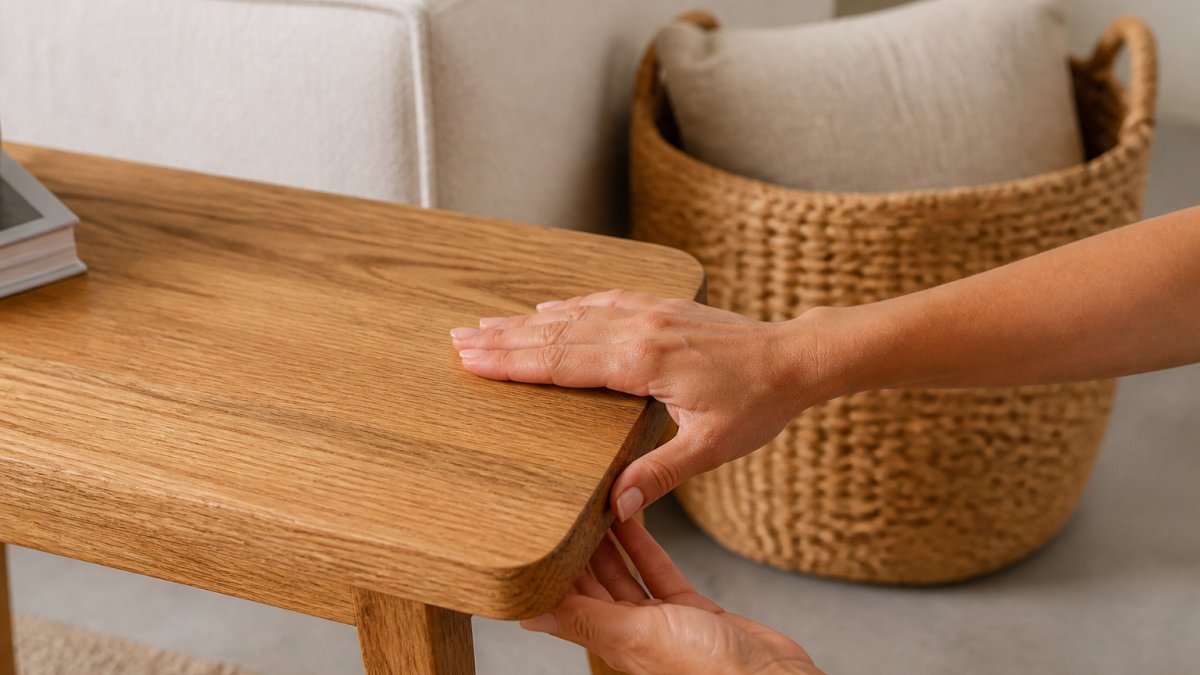
Solid timber, natural fibres, and responsibly sourced materials generally cost more at the raw materials stage. Ethical sourcing adds traceability and labour standards into the supply chain. These are the eco-friendly furniture materials that give a piece its durability, and you pay for that quality once rather than replacing it repeatedly.
Furniture Life Cycle Assessment: Where the Money Actually Goes
A furniture life cycle assessment tracks environmental impact from raw materials through manufacturing, transportation, use, and end of life. The biggest cost drivers are carbon emissions from materials and transport, plus waste to landfill when a short-lived piece is discarded. Durable furniture spreads those impacts across many years of use.
The more useful version breaks the life cycle into stages and shows where the money and the emissions actually sit, and where the sustainable option can lose.
Raw materials. The comparison only works per year of use. A longer-lasting frame spreads its material impact across more years than a short-lived one that is replaced repeatedly.
Manufacturing. Mass production lines push unit costs down through volume, but they also lock in short-life designs, glued joints, stapled frames, non-replaceable covers. Repairable construction costs more at the factory because it uses more material and more labour per unit, and that premium is what you pay for at the till.
Transport. Flat-pack design cuts shipping volume, which is a genuine efficiency. A solid assembled sofa takes up far more container space than a flat-packed one.
Use and repair. This is the stage competitors usually skip. A piece kept for 15 years with one repair has a very different profile from one replaced every four years. Repair and refurbishment extend life at a fraction of the embodied impact of a new piece, which is why repairability is an environmental feature, not just a convenience.
End of life. Solid timber can often be repaired, refinished, or repurposed; engineered wood and mixed-material pieces are harder to separate and more likely to go to landfill. Bulky furniture is often collected separately, but collection does not equal recovery.
Cost Per Use Furniture: The Comparison That Changes the Decision
Cost per use furniture is the purchase price plus expected repair and replacement costs, divided by the years you actually keep the piece. It is one of the most useful calculations a buyer can run, and it can be applied to any piece in a showroom or on a marketplace listing.
The formula is simple:
Cost per year = (purchase price + expected repair costs + replacement purchases) ÷ expected years of use
Worked through by category, the logic becomes concrete.
| Category | Fast decor example | Sustainable example | Cost-per-year logic |
|---|---|---|---|
| Two-seat sofa | €450, expected 3-4 years before frame or foam fails, often replaced rather than repaired | €1,400, expected 12-15 years with a recoverable frame and replaceable cushions | Fast: about €110-€150 per year. Sustainable: about €95-€115 per year before any repair. A single €200 reupholstery at year eight still keeps the sustainable sofa ahead. |
| Dining table | €180 veneered top, 4-5 years before veneer lifts or legs loosen | €700 solid timber, 20+ years with occasional refinishing | Fast: about €36-€45 per year. Sustainable: about €35 per year, and lower again if refinished once rather than replaced twice. |
| Bed frame | €220 particleboard, 5-6 years before joints fail | €850 solid frame, 15-20 years | Fast: about €37-€44 per year. Sustainable: about €42-€57 per year, here the fast option can win on pure cost if the sustainable frame is never repaired and the fast one is replaced only once. |
| Dining chair | €60, 2-3 years before joint failure | €240, 10-12 years, repairable joints | Fast: about €20-€30 per year. Sustainable: about €20-€24 per year, and repair rather than replacement widens the gap over time. |
Three lessons fall out of that table.
First, the sustainable option does not win automatically. A cheap piece replaced once can still be cheaper per year than a premium piece, especially if the premium piece is never repaired. The calculation is a tool, not a slogan.
Second, repair costs matter more than purchase price in the categories you use hardest, because a repair bill is a larger share of the cost of a cheap piece than of a well-made one.
Third, replacement frequency is the hidden multiplier. A piece replaced every four years is bought five times over 20 years. Even at a low unit price, the cumulative spend and the cumulative waste add up.
Watch out: comparing only the purchase price, not the cost per year, is a common mistake. Compare like with like, at the same point in the season.
How to Choose Sustainable Furniture Without Overpaying
Choosing sustainable furniture without overpaying starts with asking the right questions before you buy. Verify sustainability claims by requesting material details, sourcing information, and repairability. Prioritise pieces you can repair, refurbish, and eventually restore. Budget-conscious buyers can look at secondhand and restored furniture, which offers circular design benefits at a lower price. Focus on the categories you use hardest, where durability pays back fastest.
- Confirm the main material is solid or clearly specified
- Ask whether the piece can be repaired or refurbished
- Check sourcing and labour transparency
- Compare cost per year, not just purchase price
Frequently Asked Questions
Is sustainable furniture worth the higher upfront cost?
It depends on how long you keep the piece. A cheap flat-pack item that lasts two years costs more per year than a well-made piece that lasts fifteen, even when the sticker price is three times higher. Sustainable furniture also holds resale value and can often be repaired rather than replaced. If you plan to stay in your home for more than a few years, the total cost of ownership usually favours the better-made option.
What makes fast furniture cheaper to produce?
Fast furniture uses engineered wood and plastic-based materials that are quick to machine and assemble, thin veneers over particleboard cores, and low-cost labour in large production runs. These choices lower the purchase price but shorten the product lifespan. Once a veneer chips or a fitting loosens, repair is often impractical, so the replacement cycle starts again within a few years.
How can I verify sustainability claims before buying?
Ask for specifics rather than slogans. Look for named materials (solid oak, FSC-certified timber, natural linen), details on where the piece is made, and whether spare parts or repairs are offered. Vague terms like eco-friendly mean little on their own. A retailer that can answer these questions directly, and explain how to care for the piece, is usually the one making genuine choices.
Can buying second-hand furniture be more sustainable?
Yes. Second-hand and restored furniture avoids new raw material extraction and manufacturing emissions entirely, which is why it sits near the top of most furniture life cycle assessments. The trade-off is time and uncertainty: you need to inspect condition, arrange transport, and accept that the exact piece you want may not appear. For budget-conscious buyers, it is one of the most effective ways to furnish a home with better-made pieces.
The real challenge is finding pieces that hold their quality without paying a premium for the wrong reasons. At The Lilly Rose, sustainability is standard, not an add-on, and every piece is thoughtfully selected for quality, simplicity, and functionality. We focus on well-designed home goods that bring organisation and understated style to daily routines. Get started with The Lilly Rose and choose décor built to last.
