

Last Updated: November 15, 2026
Quick Summary
Sustainable home decor certifications fall into three groups: forest-source labels such as FSC and PEFC, finished-product emissions labels such as GREENGUARD and Indoor Air Comfort, and textile standards such as GOTS and OEKO-TEX. Each covers only part of a product's impact, so check which claim a label actually supports.
- FSC 100% means all the wood is certified, while FSC Mix means it is blended with other controlled wood.
- GREENGUARD Gold applies stricter emissions limits and is most relevant to bedrooms and children's furniture.
- GOTS requires at least 70% certified organic fibre for the "made with organic" grade and 95% for "organic".
- Check the certificate number in the certifying body's public database and confirm it is active and covers this product.
- A certificate on one range does not automatically cover another, so check its scope against the exact product.
Table of Contents
- What Sustainability Means for Home Decor
- Eco Labels for Furniture: What the Main Certifications Cover
- Organic Textile Certifications for Cushions, Rugs and Bedding
- Low VOC Furniture and Paint: What the Label Tells You
- How to Verify Sustainability Claims Step by Step
- Spotting Greenwashing and Buying Uncertified Pieces Wisely
- Choosing Your Next Piece With Confidence
- Frequently Asked Questions
What Sustainability Means for Home Decor
Sustainable home decor is furniture, textiles and accessories made with lower environmental and social costs, and sold with evidence to back the claim. Those claims are only as good as the certification behind them.
Sustainability in decor usually means a mix of things: responsibly sourced wood, lower-impact finishes, fair working conditions and pieces built to last. If you're furnishing a compact home, see sustainable home decor for small apartments. A label may cover one of these and say nothing about the rest.
At The Lilly Rose, sustainability is part of how we work, and we think buyers should be able to check our claims for themselves.
Eco Labels for Furniture: What the Main Certifications Cover
Eco labels for furniture fall into two broad groups. Some certify the wood or fibre source, such as forest management schemes. Others certify the finished product against chemical or emissions limits. A single piece can carry both, or neither, and knowing which group a label belongs to is the difference between a meaningful claim and a decorative badge.
Forest and fibre-source schemes
FSC (Forest Stewardship Council) certifies that timber comes from forests managed to its environmental and social standard, and it tracks the timber through the supply chain via a chain-of-custody certificate (Chain of Custody Certification). For decor buyers, the practical detail is the label type: FSC 100% means all the wood is certified; FSC Mix means certified, recycled or controlled wood is blended; FSC Recycled covers reclaimed material.
PEFC (Programme for the Endorsement of Forest Certification) is an umbrella scheme that endorses national forest certification systems, including Ireland's own. It works similarly to FSC in tracking chain of custody, but the underlying forest standard is set nationally rather than by a single international body.
Finished-product and emissions schemes
GREENGUARD and GREENGUARD Gold test finished products, furniture, mattresses, paints, adhesives, for volatile organic compound emissions in a controlled chamber. Gold applies stricter limits and is the version most relevant to bedrooms and children's furniture.
Indoor Air Comfort (Eurofins) is a European emissions scheme that tests products against a range of VOC limits and is common on paints, varnishes and composite boards sold here. It is product-specific, so a low-emission paint does not make the furniture it coats low-emission.
Cradle to Cradle (C2C) goes further than emissions: it assesses material health, material re-use, renewable energy, water stewardship and social fairness across five levels (Basic through Platinum). It is the closest thing to a whole-product sustainability label in decor, but it is demanding and relatively rare on furniture sold at mid-market prices.
A decor-specific directory by material
| Material or product | Labels that actually apply | What they verify | What they leave out |
|---|---|---|---|
| Solid wood frames, shelving, tables | FSC, PEFC | Forest source and chain of custody | Finish chemicals, factory labour |
| Composite boards, MDF, plywood | FSC or PEFC (wood source) plus GREENGUARD, Indoor Air Comfort or C2C (emissions) | Source and/or emissions | Durability, end-of-life |
| Upholstered seating and mattresses | GREENGUARD Gold, C2C, OEKO-TEX for the textile component | Emissions, material health | Timber source unless separately certified |
| Paints, varnishes, adhesives | Indoor Air Comfort, GREENGUARD | VOC emissions | Renewable content, social criteria |
| Cushions, rugs, bedding | GOTS, OEKO-TEX Standard 100 | Fibre and processing rules; harmful substances | Durability, colour fastness |
| Self-declared claim | None | Whatever the seller states | Anything independently checked |
What each label does not tell you
A forest label confirms where the timber came from, not that the finish is low in VOCs, not that the factory pays a living wage, and not that the piece will last. An emissions label confirms what the product releases, not that the wood is responsibly sourced.
Watch out: a brand that displays an FSC logo on its homepage may hold certification for one collection only. Before you commit, compare how to choose modern home decor that actually lasts. Certificates are issued to specific factories and supply chains, so a label on one range does not automatically cover another, check the certificate scope against the exact product you are buying.
Organic Textile Certifications for Cushions, Rugs and Bedding
Textile certifications for decor are not one thing. Some certify how the fibre was grown; some certify what the finished fabric contains; some do both across the whole supply chain. A cushion can carry one, two or none of these, and the badge alone will not tell you which.
Fibre-and-processing standards
GOTS (Global Organic Textile Standard) is the most comprehensive textile standard you will see on decor.
OEKO-TEX Standard 100 tests the finished article, fabric, thread, filling, buttons, zips, for harmful substances against a limit list that is updated annually.
The Global Recycled Standard (GRS) applies to textiles with recycled content, recycled polyester cushion fills, recycled cotton rugs, and verifies recycled content, chain of custody, social criteria and chemical restrictions. If a rug is sold as "recycled", GRS is the label that makes that claim checkable.
What organic does and does not mean
Organic does not mean durable, and it does not mean free of all chemicals. GOTS permits a restricted list of processing chemicals; OEKO-TEX permits substances below set limits. Both are about reducing harm, not eliminating chemistry. Nor does organic mean the item will survive years of washing and sunlight, colour fastness and abrasion resistance are separate qualities that no organic label tests.
Watch out: a cushion can be organic in its cover and synthetic inside. Read the product details for the fill, the backing and the trim, because a GOTS label on the outer fabric does not automatically cover the filling or the lining.
How to read a textile label before you buy
- Find the licence or certificate number. GOTS, OEKO-TEX and GRS all issue numbers that can be checked on the certifying body's public database. A badge with no number is decoration.
- Check the scope. Confirm the certificate covers this product type, a GOTS certificate for fabric does not automatically cover a finished cushion if the sewing stage is outside the certified chain.
- Check the date. Textile certificates are renewed annually; a lapsed certificate does not validate a current claim.
- Read the composition. The fibre content, fill and backing tell you more than the badge about what you are bringing into your home.
- Ask about the gaps. If the label covers the cover but not the fill, ask what the fill is made of and whether it carries its own certification.
This is also the fastest way to test any seller, including us.
Low VOC Furniture and Paint: What the Label Tells You
Volatile organic compounds (VOCs) are chemicals that can be released from paints, varnishes and some composite boards. A low-VOC label tells you the product was tested against emissions limits, but it does not say how the item will behave in a small, closed room over years of use.
If indoor air quality matters to you, look for a tested emissions label and check the test standard it cites. Ventilation affects exposure as much as the product does, so a low-emission piece is a sensible choice, not a guarantee.
How to Verify Sustainability Claims Step by Step
Verification takes about ten minutes per product and removes most of the guesswork. Work through these steps before you buy.

- Identify the claim. Write down exactly what is being claimed: "FSC-certified", "organic", "low VOC" or just "sustainable". Vague wording is a warning sign on its own.
- Find the certificate number. Credible certified products list a licence or certificate code. If the seller will not provide one, treat the claim as unverified.
- Check the certifying body's database. Enter the code on the certifying body's public search page and confirm the status is active and the scope covers this product.
- Confirm the scope. Check whether the certificate covers this product type, this factory and this material, not just the brand name.
- Check the date. A lapsed certificate does not validate a claim made today.
- Ask about the gaps. If the label covers timber but not finishes, ask what the finish contains.
This process is also a practical way to test any seller.
Certification Costs, Renewal and Audit Frequency
Certification is not free for the maker, and the cost shapes which brands can afford to keep their labels current. Fees vary by scheme, company size and the number of product lines covered. Certificates are usually renewed on an annual cycle, with audits that may be scheduled or unannounced depending on the scheme.
For buyers, the practical point is renewal. Check the expiry date on any certificate a seller quotes.
Spotting Greenwashing and Buying Uncertified Pieces Wisely
Greenwashing is a claim that sounds green but cannot be checked. Watch for phrases such as "eco-conscious", "natural feel" or "planet-friendly" with no certificate, no material breakdown and no way to verify them. Images of leaves or earth tones prove nothing about how a product was made.
Not every good product carries a label. Handmade, vintage and local pieces may have lower impact than a certified item shipped from far away, but you need to judge them on their facts: what the materials are, how durable the construction looks, and whether the maker will explain the process. A clear, honest answer is more useful than a badge.
Choosing durable, long-lasting products is often a sensible sustainable choice.
Choosing Your Next Piece With Confidence
Start with what you can verify: a current certificate, a stated material and a clear return policy. Then consider durability and fit for your space. Our Solid Wood Photo Frame is priced at €21.14 and is made from solid wood with a natural grain. Our Seagrass Laundry Storage Baskets are priced at €10.16 and are made from natural seagrass.

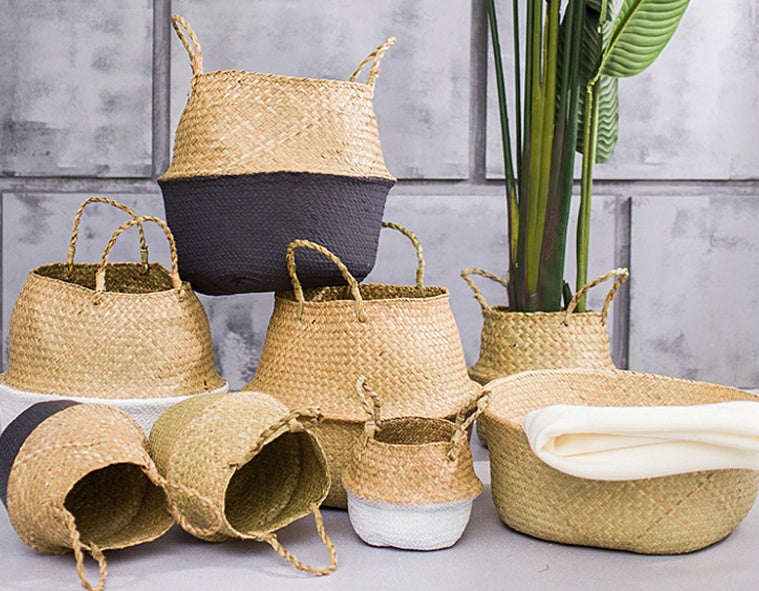
At The Lilly Rose, we'd rather you check our claims than take them on trust. Browse the collection to see the materials and details listed for each product.
Frequently Asked Questions
What certifications should I look for in sustainable home decor?
Look first for certifications that match the material in front of you. For wood and wood-based products, FSC certification shows the timber comes from responsibly managed forests and has a chain of custody that can be traced. For textiles, organic certifications such as GOTS cover fibre growth and processing. For finishes and paints, low VOC claims should be backed by a recognised emissions test. A single logo rarely covers everything, so check each material separately rather than trusting a general sustainability badge.
What does FSC certification mean for furniture and home accessories?
FSC certification means the wood or paper in a product was harvested from forests managed to set environmental and social standards, and that the certificate holder can trace the material back through the supply chain. It applies to solid wood frames, baskets with wood components and furniture. It does not automatically mean the finished product is low-impact in every respect, such as its finishes, adhesives or how long it lasts. Check that the product listing names the FSC licence code, not just the logo.
What is the difference between an ecolabel and a sustainability certification?
An ecolabel is a mark that a product meets a defined environmental standard, often awarded by an independent scheme after testing. A sustainability certification is usually broader and can cover social conditions, traceability and audits of the producer. Ecolabels tend to focus on the product itself, while certifications often focus on how and where it was made. Both are only as reliable as the scheme behind them, so the question to ask is who checks the claim and how often.
How can I verify a sustainability label before buying?
Start by finding the certificate number on the product page or packaging, then search that number in the certification body's public database. Confirm the product category and the brand are listed and the certificate is still valid. If a seller only shows a logo with no licence code or no way to check it, treat the claim as unverified. Asking the retailer for a written statement on which materials are certified and which are not is a reasonable step before you order.
