

A digital clock can feel like a natural part of a room rather than a bright display set apart from the rest of the décor. The modern digital wall clock aesthetic is easiest to get right when you consider the wall, viewing distance and surrounding colours together. A crisp display may look stark beside soft, traditional furnishings, while even a lovely clock can feel out of place if it is crowded by artwork or poorly positioned. A little breathing room and a thoughtful spot help it settle in.
This guide covers how to choose a wall and position, work with the colours and textures already in your room, and keep nearby accents from making the display feel cluttered. You’ll also find a simple way to test an arrangement before settling on it. With a few considered choices, a practical everyday object can become a decorative detail that feels at home in your space.
Key Takeaways
- A modern digital wall clock aesthetic comes from how the display relates to the room, not simply from the clock’s style.
- Choose the display’s colour and scale to suit whether you want a quiet accent, a clear focal point or a playful statement.
- Thoughtful surrounding details can help a digital clock sit comfortably in minimalist, cottage-inspired and contemporary rooms.
- Test the clock’s position from the viewpoints you use every day, then edit nearby accents to keep the wall feeling balanced.
- Discover Lilyrose’s 3D LED Wall Clock, Digital Display, for a considered modern detail in your home.
What Makes a Modern Digital Wall Clock Aesthetic Feel at Home?
A modern digital wall clock aesthetic depends on how the clock relates to its room, not on its style alone. A clear display adds a crisp, contemporary note, while the colours, materials and objects around it can make that note feel warm, quiet or expressive. The aim is to keep the time easy to see without making the clock feel detached from the room’s character.
A well-integrated digital wall clock is easy to read and feels as though it belongs on its wall. Its position, scale and nearby details all contribute. A bare stretch of wall gives the display room to stand out; a busier arrangement may call for more space around it. For background on how digital clocks work and different display types, explore History and types of digital clocks.
Think of the clock as part of a small composition, not just an object to fill an empty patch. Compare its visual weight with the furniture and artwork nearby. A clock placed with intention can bring structure to a wall and serve a practical purpose in daily life. Tucked into a crowded corner as an afterthought, it may seem disconnected, even if its appearance suits the room.
Why a digital clock can be both practical and decorative
A wall clock is often glanced at while making breakfast, relaxing in the sitting room or passing through a hallway. Place it where you naturally look, and that everyday glance feels easy while the display contributes to the room’s overall look.
Rather than surrounding it with ornaments simply to make it decorative, let the clock’s shape and display have breathing room. One or two nearby details can connect it to the wall; a clear area around it can make the arrangement feel calmer. Practical and decorative needn’t compete.
Start with the room’s existing mood
Before choosing a spot, notice what already gives the room its character. Look at the dominant colours, the materials that draw your eye and the overall level of ornament. Perhaps the room feels soft and layered, with natural textures and a few cherished objects. Or perhaps it has open surfaces, clean lines and little decoration.
These details can guide the clock’s role. In a room with patterned fabrics and framed pictures, try a quieter stretch of wall where its display offers a simple visual pause. In a more minimal space, it could provide a point of interest without extra accents. A cottage-inspired room may feel more cohesive when the clock is balanced by familiar textures, rather than set within a stark, overly formal arrangement.
There’s no single interior style a digital clock must follow. Let the room set the tone, then decide whether the display should blend in softly or become a deliberate focal point. That choice is the start of a wall arrangement that feels useful, personal and at home.
Choose Display, Colour and Scale to Suit Your Room
Once you’ve noticed the room’s existing character, decide how much visual attention the clock should receive. Display, colour and scale work together: a subdued contrast can make a clock feel quietly connected, while a stronger contrast gives it more presence. Neither approach is automatically better. Consider the wall, nearby furnishings and the feeling you want the room to hold.
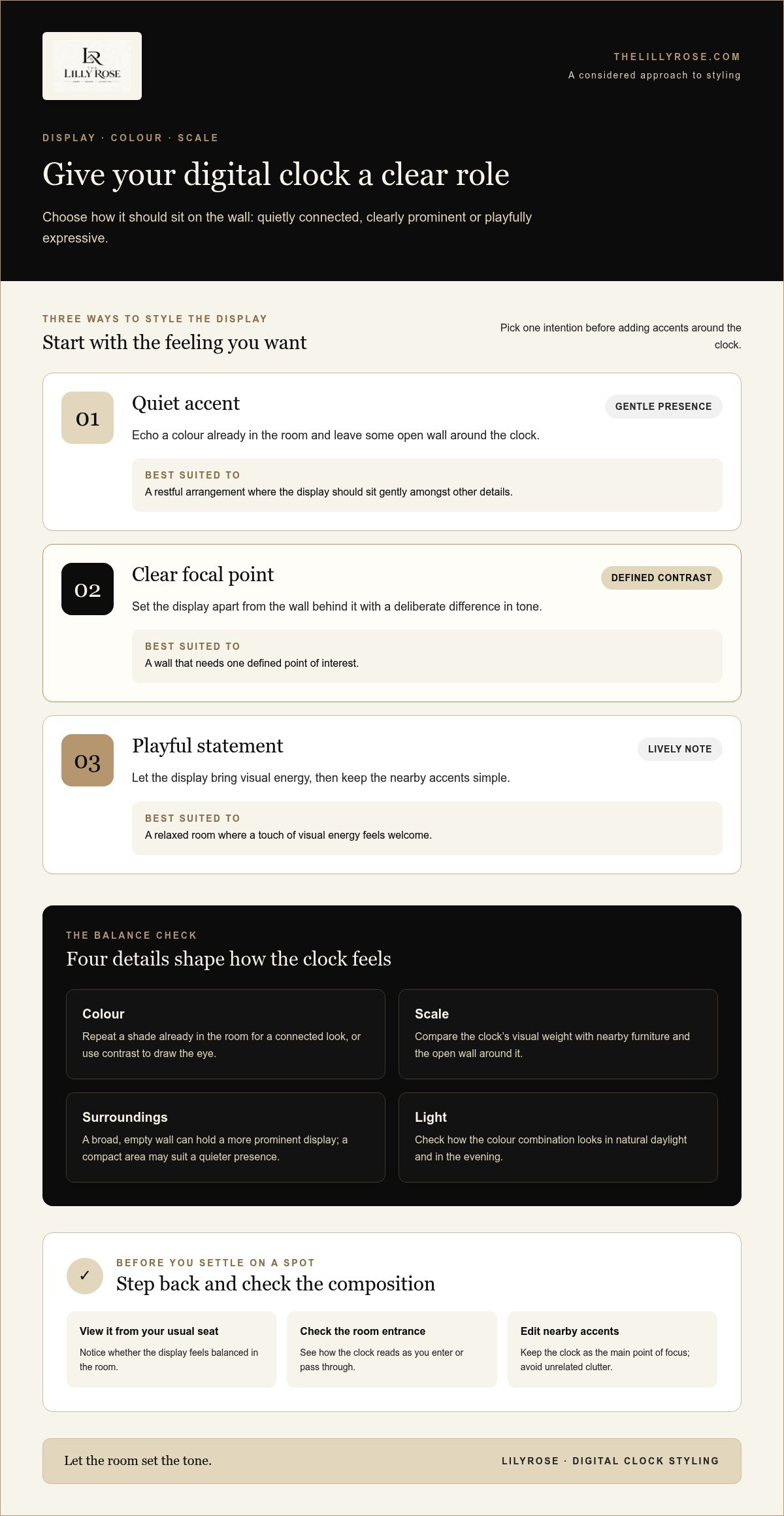
Colour sets the clock’s visual tone, whilst scale determines how much space it seems to claim. Use this comparison to choose a direction before arranging anything around the display:
| Visual role | How to approach it | Best suited to |
|---|---|---|
| Quiet accent | Echo a colour already present and leave a little open wall around the clock. | A restful arrangement where the display should sit gently amongst other details. |
| Clear focal point | Use deliberate contrast so the clock stands apart from its immediate surroundings. | A wall that needs one defined point of interest. |
| Playful statement | Let the display provide a lively note, then keep other nearby accents simple. | A relaxed room where a touch of visual energy feels welcome. |
Decide whether the clock should blend in or draw the eye
For a restrained look, pick up a shade already found in the room, perhaps in a cushion, lampshade or framed print. The clock can feel connected without disappearing. If you’d rather make it a focal point, create a clear difference between the display and the wall behind it. Choose one intention first. Several contrasting accents at once can make the arrangement feel unsettled.
Contrast doesn’t require a particular colour scheme. A lighter display against a deeper wall, or a darker one against a paler surface, may create enough definition. Consider how the colours look in the room’s natural light, too. A combination that feels gentle during the day may look more pronounced in the evening.
Use proportion to keep the wall feeling balanced
There’s no single ideal clock size for every room. Compare its visual weight with the furniture below or beside it and the open wall around it. A broad, mostly empty wall can hold a more prominent display, while a compact area above a narrow console may call for a quieter presence. Step back and look from your usual seat or the room’s entrance.
If the clock seems to overpower nearby furniture, try a less crowded wall or give it more breathing room. If it looks lost, try a better position or a small, related accent to anchor it. Keep the display as the main point of focus rather than surrounding it with unrelated objects.
These choices shape a modern digital wall clock aesthetic that feels considered rather than overly styled. Lilyrose’s 3D LED Wall Clock, Digital Display can bring a digital display into your arrangement as a focal point or quiet accent.
Pair a Modern Digital Wall Clock with Different Interior Styles
A digital clock doesn’t need to dictate a room’s character. Its crisp display can sit comfortably in different interiors when the surrounding materials, colours and objects create a thoughtful connection. Rather than trying to disguise the modern element, give it a role that suits the space: a gentle point of contrast, a useful visual anchor or one part of a pared-back arrangement. That’s what makes a modern digital wall clock aesthetic feel personal rather than copied from a picture.
Soften a digital display in a cottage-inspired room
In a cottage-inspired space, balance the clean lines of a digital display with textures already in the room. A wooden console, woven basket, linen cushion or ceramic ornament can lend a softer note without competing with the clock. Let one or two details do the work; filling the wall with rustic accents may make the contrast feel forced. Leave enough clear space around the display for it to remain a natural part of the arrangement.
Consider the whole wall, too. If it already has patterned fabric or a collection of framed pictures, place the clock where its shape has room to register. In a quieter corner, a nearby natural material can link the clock to the rest of the room without making every object match.
Keep a contemporary or minimalist wall composed
In a minimalist room, open wall space is part of the design. Allow the clock to stand on its own, especially if its display already draws the eye. A single framed print or a simple surface beneath it may be enough. Repeating a colour or shape from elsewhere in the room, such as a dark line in a frame or a curve in a nearby lamp, can create continuity without adding clutter.
For a contemporary interior, balance the display with a mix of smooth and tactile finishes. A simple shelf, ceramic vessel or piece of natural wood can soften a crisp digital presence while keeping the arrangement uncluttered. Choose details that echo the room’s existing forms rather than introducing a new style solely to decorate the clock.
Small relationships make a wall feel considered. Notice whether nearby furniture has straight edges or rounded forms, then repeat one of those shapes in an adjacent object or frame. A repeated colour can also draw the eye from the display to a cushion or artwork, helping the clock feel connected rather than isolated.
Whatever the interior, avoid matching every detail too precisely. A little contrast gives the arrangement life, while repeated textures and colours help it settle. Let the clock remain visible, then add only what helps it belong: a warm material, a familiar shape or a quiet echo of a colour already in the room.
How to Style a Digital Wall Clock: A Simple Step-by-Step Method
A little planning can make the difference between a clock that seems to float alone and one that feels naturally part of the room. Try this process before settling on its place. You can adjust the arrangement as you go, keeping the display visible while allowing the wall to retain its character.
Find a natural position before arranging the wall
Begin with the places you actually use: a favourite seat, the kitchen table or the doorway you pass through each day. Choose a spot where the clock is comfortable to see, then consider how it relates to furniture, doors and existing artwork. Before committing, make a temporary mock-up with paper cut to roughly match the clock’s outline, or hold the proposed position in view while moving around the room.
- Choose the wall. Look for a place that fits your daily routine and gives the clock enough room to register. Notice whether doors, shelving or framed pieces already draw attention nearby.
- Test the position. Mark the proposed area temporarily, then check it from the sofa, a usual standing spot and the room’s entrance. A position that looks balanced close up may feel different from across the room.
- Edit the surrounding details. Start with what’s already there. Keep a small number of complementary objects and leave clear space around the display so it doesn’t have to compete for attention.
- Review the whole wall. Step back and take in the clock alongside the furniture and nearby décor. Shift its position or remove an accent if the arrangement feels crowded or disconnected.
Edit the surrounding details for a calmer finish
Let the clock lead, then choose a few details that help it feel connected. A nearby object might repeat a colour already in the room, while a familiar shape or natural texture can soften the display’s crisp lines. Step back between changes. If an accent pulls your eye away from the clock or makes the wall feel busy, try removing it rather than adding another piece to balance it.
Before settling on the final arrangement, use this checklist to see whether your choices work together, rather than judging each object on its own.
- Balance: Does the clock feel in proportion with nearby furniture and the open wall around it?
- Contrast: Can you notice the display without it overwhelming the rest of the arrangement?
- Connection: Do one or two colours, shapes or textures link it to the room?
- Breathing room: Is there enough clear space to keep the wall from feeling crowded?
- Everyday view: Does its position feel natural from the places you sit, stand and enter?
When those details feel settled, the modern digital wall clock aesthetic becomes less about decorating around a device and more about creating a wall that works for your home. Explore Lilyrose’s 3D LED Wall Clock, Digital Display.
Bring the Modern Digital Wall Clock Aesthetic into Your Home
A considered digital clock arrangement doesn’t depend on a complete room makeover. The display, its position and the details around it simply need to feel as though they belong together. Give the clock a place that suits how you move through the room, then let the existing colours, textures and furnishings help it settle in. The result can feel both practical and personal, adding a modern note without asking the rest of the room to change.
Connect the clock to a thoughtfully curated room
Start with what you already love. A clock can sit alongside a favourite print, a wooden sideboard or a few familiar decorative pieces, provided the wall still has room to breathe. Echo a colour from a nearby object or place the display near a natural texture to soften its crisp appearance. Small links like these help a modern feature feel at ease in a warm, lived-in home.
This balance makes the modern digital wall clock aesthetic feel welcoming: the clock brings a clean visual element, while the room keeps its own character. There’s no need to make every accent match or fill an empty space simply because it’s there. A calm arrangement often comes from choosing only a few details that connect naturally.
Lilyrose brings together handpicked home décor with a rustic, cottage-inspired sensibility. Its 3D LED Wall Clock, Digital Display adds a digital detail to consider within that warm, home-focused setting. Picture it on a wall you pass each morning, or in a living space where a clear time display would be useful. Its position and the objects nearby can help it feel part of the room, rather than an addition made in isolation.
Explore a digital clock for your own space
To decide what might suit your home, picture the wall where you’d most naturally glance at the time. Think about what’s already there and whether you’d like the clock to blend in gently or bring a little contrast. Lilyrose’s 3D LED wall clock guide offers further product-selection context to consider alongside your needs and surroundings.
There’s no need to rush towards a finished arrangement. Notice how the room feels from its everyday viewpoints, and make small adjustments if they seem right. A little breathing room and a thoughtful connection to the décor can be enough to bring the display into harmony with the space.
When you’re ready, explore Lilyrose’s home décor for handpicked pieces with a rustic, cottage-inspired feel.
Let Your Wall Take Shape at Its Own Pace
A room’s character grows through small choices made over time. You don’t need to settle every detail at once. Start with the wall you pass each day, and let its colours, textures and natural rhythm guide what belongs there. A digital clock can be a fresh, useful note within a home that still feels warm and personal.
Lilyrose’s handpicked, rustic cottage-inspired décor includes the 3D LED Wall Clock, Digital Display. Let it inspire a rethink of a familiar corner, or keep the idea in mind as your room evolves. The most appealing modern digital wall clock aesthetic is one that feels at ease with the home you already love.
Explore Lilyrose’s home décor and choose a detail that feels right for your space.
Frequently Asked Questions
Can a digital wall clock look good in a minimalist room?
Yes. A digital wall clock can work in a minimalist room when its visual presence suits the wall and the arrangement feels deliberate. A modern digital wall clock aesthetic may feel especially natural if one detail, such as a dark picture frame or a clean furniture line, quietly echoes its visual weight. Keep the display apart from busy artwork and preserve open space so the room’s simplicity still comes through.
How do I make a digital clock look less out of place in a traditional home?
Let the traditional room lead, rather than changing its character to suit the clock. If a wall has floral paper, framed photographs or a familiar wooden sideboard, consider how the display sits alongside those features. A nearby textile or object in a related tone can create a gentle connection. You don’t need to make the clock look traditional; the aim is for it to feel at ease.
Where should I hang a digital wall clock in a living room?
Choose a position that works with the way you use the room. From your usual seat, check whether the display is easy to notice without being hidden by a lamp, tall plant or open door. Then view it from the entrance and consider how it relates to the sofa, shelving and artwork. A paper outline can help you compare possible spots before making a final decision.
What colours go well with a modern digital wall clock?
Use the room’s own palette as your starting point, rather than relying on a fixed colour rule. For a quieter effect, look for a shade already repeated in a rug, cushion or piece of artwork. If you’d like the clock to stand out, choose a stronger contrast with the wall and keep other nearby colours subdued. View the combination in daylight and evening light before settling on it.
How can I style a wall clock without making the wall look cluttered?
Treat the clock as the arrangement’s anchor and build around it sparingly. A single framed print or a small object on a shelf below may be enough, especially if the wall already has texture or pattern. Leave some unoccupied wall so each piece can be noticed. Step back and look at the whole arrangement. If an item draws your eye away from the clock, try removing it.
Is a digital wall clock suitable for a cottage-inspired home?
Yes. A digital clock can sit comfortably in a cottage-inspired home when it feels connected to the room’s character. Notice the colours and textures already present, such as patterned upholstery, woven details or well-loved furnishings, and let these guide the surrounding arrangement. Keep nearby décor simple enough that the display doesn’t feel forced into a theme. The mix of contemporary and familiar elements can feel relaxed and personal.